
Most Fountain drain calls start small. A bathroom sink that empties slowly turns into a tub that fills with gray water during a shower, and then a washing machine drain spits suds into the basement floor drain. Each stage points to a blockage farther down the line, and the quicker it is cleared, the less water ends up on your flooring.
This page explains how we separate a single-fixture clog from a main line problem, what snaking and cabling actually do inside the pipe, and when a stubborn blockage means the line needs hydro jetting or a camera look through sewer camera inspection. If sewage is already coming up, read the next section first.
When a clogged drain is an emergency
Treat a drain as an emergency when water is coming up out of a floor drain, a toilet or a tub that was not in use, because that means the main line is blocked and every fixture upstream is feeding it. The same goes for a blockage that has put standing water on a finished floor, or any backup that smells like sewage.
While you wait for us
- Stop using sinks, showers, dishwashers and washing machines, since every gallon sent down the line ends up on the floor.
- Do not pour chemical drain cleaner into a backed-up line. It sits in standing water and can burn skin and damage the pipe, and it makes the plumber's work riskier.
- Keep children and pets away from sewage water and wear rubber gloves if you have to move belongings.
- Photograph the water and the affected floor before you clean anything up, in case you file an insurance claim.
Dispatch works day and night, including weekends and holidays. Tell the dispatcher which fixtures are affected, because a single stopped sink and a whole-house backup need different equipment on the truck.
Residents of Mesa Ridge and Cross Creek can see how the districts there divide up the pipes.
One fixture or the whole line? How to tell
The first job on any drain call is locating the blockage. Callers describe the same handful of symptoms, and each one points somewhere different in the system.
| What you see | Likely location | What we do first |
|---|---|---|
| One bathroom sink drains slowly, others are fine | Trap or branch line under that sink | Clear the trap, then run a small cable down the branch |
| Kitchen sink backs up when the dishwasher runs | Kitchen line, often grease or a disposal outlet | Cable the kitchen line and check the dishwasher connection |
| Tub gurgles when the toilet flushes | Shared bathroom branch or vent problem | Cable the branch, then test the vent |
| Toilet and tub on the lowest level back up together | Main sewer line | Cable the main line from the cleanout, then camera if it returns |
| Water bubbles up in a floor drain during laundry | Main line below the laundry connection | Open the cleanout and clear the line |
If two or more fixtures on different branches slow down at once, assume the main line until it is proven otherwise. Finding the cleanout outside the house, usually a capped pipe near the foundation, helps us start faster. A fuller breakdown of main line stoppages is on our sewer line cleaning page.
Snaking, cabling and what each tool can reach
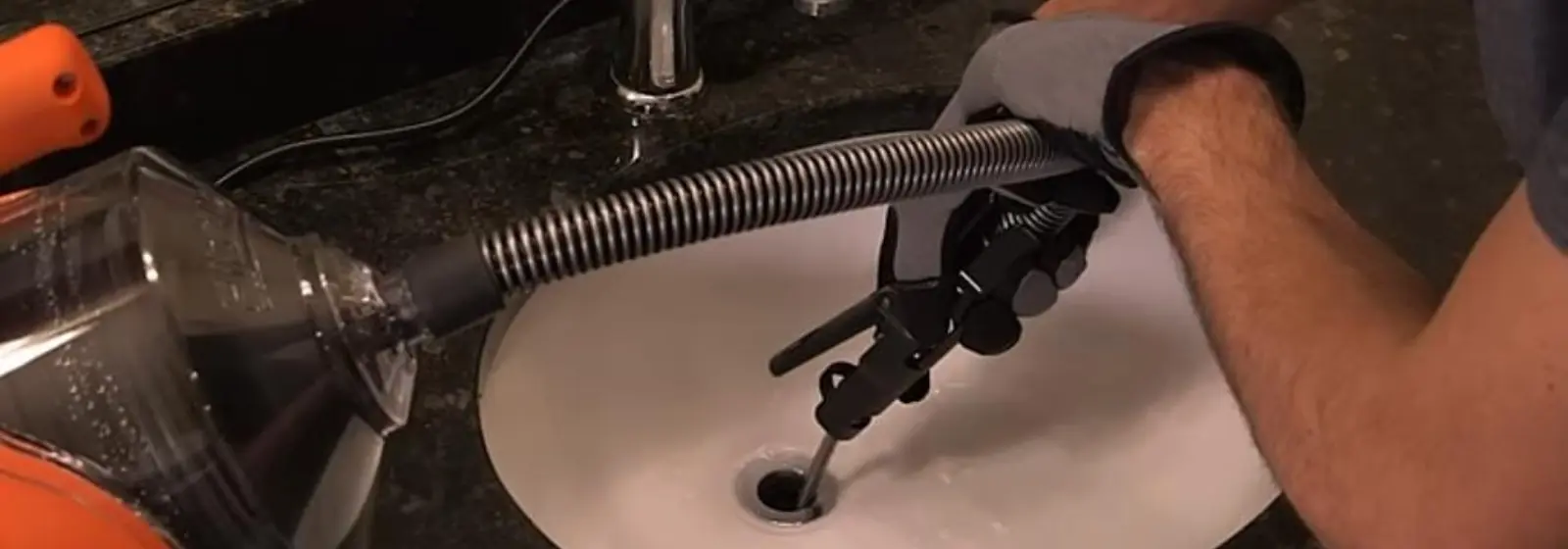
A hand auger or drain snake is the right tool for a trap or a short branch. It bores a hole through the blockage so water can move again. For longer runs, a motorized cable with a cutting head is used. It travels farther down the line and can chew through roots and heavy buildup that a hand tool leaves behind.
Cabling is not a cure for a damaged pipe. If the cable keeps hitting the same spot, brings up pieces of clay or broken pipe, or the blockage returns within weeks, the line has a defect that cleaning alone will not solve. That is the point where a camera run shows the cause, and where sewer line repair becomes the real conversation.
Signs a clog is coming back for a reason
- The same drain stops up more than twice in a few months.
- The cable stops at the same distance each time.
- You see roots, scale or pipe fragments on the cable when it is pulled out.
- Water drains, but only after sitting for several minutes.
Kitchen lines, showers and everyday causes
Kitchen clogs usually come from cooking grease that cooled and hardened inside the line, coffee grounds, and food scraps that passed the disposal and settled in the first bend. Bathroom clogs are mostly hair and soap scum, and a tub drain often holds a dense plug just below the stopper. Neither is a sign you did anything wrong, only that the line has been in use.
If the kitchen sink and the disposal are stopping together, the disposal may be part of the problem, and our garbage disposal repair page covers that side of the job.
Fountain water and your drain lines
Fountain Utilities lists its water at about 165 ppm hardness from November through April and about 350 ppm from May through October. Water that hard leaves mineral film inside pipes and combines with soap into the scum that narrows bathroom lines. That is one reason tub and sink drains in this area can slow down more quickly in summer.
Fountain has newer subdivisions such as Lorson Ranch and Mesa Ridge, and an older core near Downtown Fountain and City Hall Plaza in a city founded in 1859. We do not guess what a drain line is made of or what condition it is in from the address. A camera run shows the material and the condition, and it is the only way to know.
What drain cleaning costs and how we quote it
What moves the price
- Where the blockage is
- A trap under a sink is a short job, while a main line clog may need a cable machine and a cleanout visit.
- Access
- A cleanout outside the house speeds things up. If none exists, we may need to pull a toilet or work through a roof vent.
- Equipment
- Hand auger, cable machine, jetter or camera each carry different time and cost.
- Hour of the call
- Night and weekend dispatch is priced for the hour. We tell you the number before work starts.
- Cause
- A simple clog costs less than roots or a collapsed line, which need repair after clearing.
Some homeowner policies cover sudden water damage from a backup and some do not, and many exclude slow leaks and wear, so read your policy or ask your agent before assuming. For your real number, call (719) 530-4349 and describe what the fixtures are doing.
What the plumbing code says about drains
Model plumbing codes such as the International Plumbing Code (IPC) and the Uniform Plumbing Code (UPC) set rules for traps, vents, drain slope and cleanouts. That is why a drain needs both water and air to flow, and why a missing cleanout makes clearing a main line harder. States and cities adopt and amend those codes, so ask the Pikes Peak Regional Building Department which edition applies at your address.
Where we clear drains around Fountain
We serve homes along Mesa Ridge Parkway and the streets around Cross Creek, and we also cover Security-Widefield and the Fort Carson area. Businesses can read about after-hours service on our commercial plumbing page.
Drain Cleaning questions in Fountain, CO
Yes. Our line is open 24/7, including weekends and holidays. Call (719) 530-4349, tell the dispatcher which fixtures are backing up, and a plumber is sent as soon as one is available. We give you the price before work starts.
The washer pushes a large volume of water down the main line quickly, and a partial blockage cannot carry it. The water looks for the lowest opening, which is often a floor drain or a tub. That pattern usually means a main line stoppage.
We advise against it on a backed-up line. The chemical sits in standing water, can burn skin during the plumber's work and may harm older pipes. A snake or cable removes the blockage instead of dissolving part of it.
Look for a capped pipe, often 3 or 4 inches wide, near the foundation or in a yard near the house. If you cannot find it, tell the dispatcher and we will look for it when we arrive.
It fixes a clog. If the line is cracked, bellied or full of roots, the blockage returns. A camera run after cleaning shows which case you have.
Yes. We send plumbers to both areas from our Fountain base. See the Security-Widefield and Fort Carson pages for the ZIP codes we cover.