
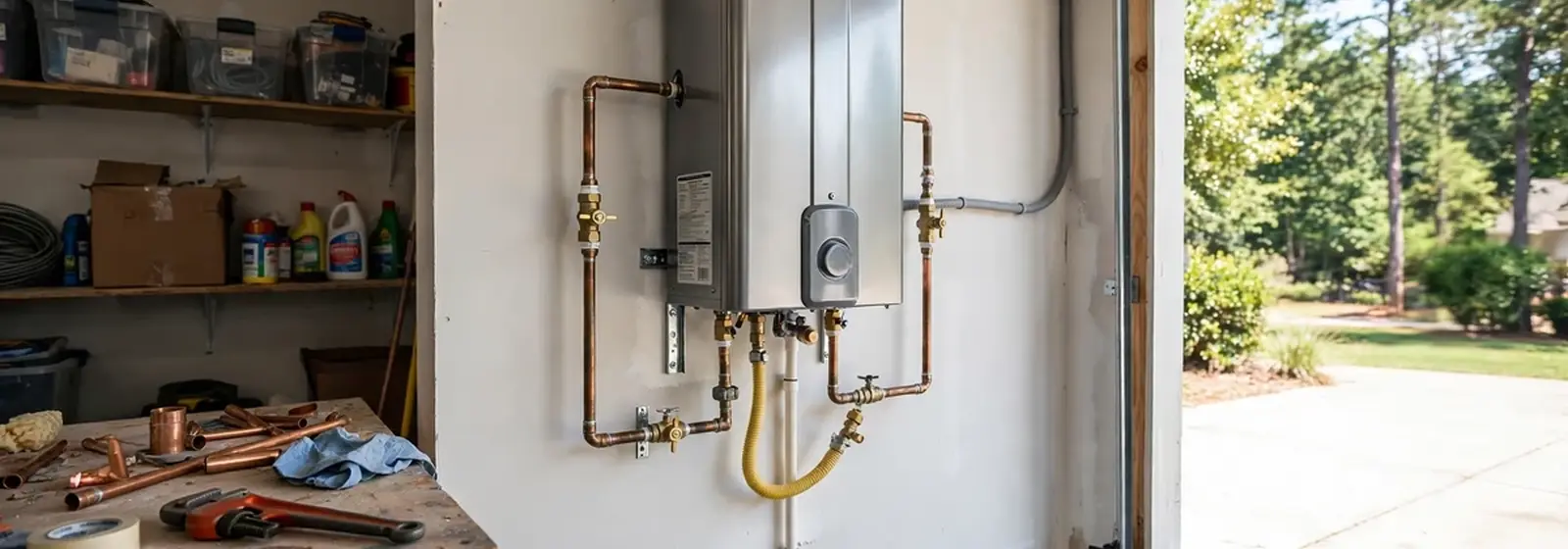
If the vent is wrong, exhaust can spill into the living space. That is a safety risk, and it is why venting is a part of the install that an inspector checks. Water heater installs need a permit and inspection in Colorado, and the work must be done by a licensed plumber under a registered contractor.
This guide explains the main vent types, what makes a vent work and which signs to take seriously. It does not replace the manual or your inspector.
Why the vent matters
Carbon monoxide warning
- Install working carbon monoxide alarms near sleeping areas and the heater.
- If an alarm sounds, get everyone outside and call 911.
- Do not use a heater with a damaged or disconnected vent.
Carbon monoxide has no smell. A bad vent, a blocked flue or a heater starved of air can produce it. Treat any sign of exhaust backing into the house as an emergency.
Common vent types
| Type | How it works | Notes |
|---|---|---|
| Natural draft | Hot gases rise through a metal flue and out the roof | Needs a steady upward path and combustion air |
| Power vent | A fan pushes exhaust through a pipe, often to a side wall | Needs electric power |
| Direct vent | Sealed system draws air in and sends exhaust out through paired pipes | Does not rely on room air |
| Condensing or tankless vent | Uses plastic pipe rated for cooler exhaust | Check the manual for approved material |
Which type your heater uses depends on the model. The manual lists approved vent materials, maximum lengths and the number of elbows allowed. Using the wrong pipe material is a serious mistake.
What makes a vent work
Key principles
- The right diameter for the heater's input rating.
- An upward slope on horizontal runs for natural draft vents.
- Secure joints that are properly fastened and sealed as the manual requires.
- Required clearance from combustible materials.
- A termination point that meets the manual and local rules.
- Enough fresh air for combustion.
The exact numbers for slope, clearance and length depend on the appliance and the code adopted locally. Your inspector and the manufacturer's instructions have the final word.
High elevation
Fountain sits at about 5,558 feet. Gas appliances run at lower air density at altitude, and some manufacturers publish instructions or adjustments for higher elevations. Read the manual for your model and tell your plumber the elevation, since it can affect combustion.
Signs of a vent problem
Take these seriously
- Soot or scorch marks around the heater.
- A yellow, lazy burner flame instead of a steady blue one.
- Rust or water stains on the vent pipe.
- A hot or sooty draft hood.
- The pilot going out repeatedly.
- A burning smell or headaches when the heater runs.
If you see any of these, shut the unit off and call. Our water heater repair page explains how we diagnose such issues.
Combustion air and the room
A heater needs air to burn fuel. Natural draft units take air from the room, so the room must have enough openings or volume. A heater in a small closet with no air supply may burn poorly and produce carbon monoxide.
That is one reason replacing a heater in a tight space is more than swapping the tank. The installer checks the room, the vent and the supply of air, and the inspector looks at the same things. Direct-vent models avoid the issue by drawing air from outside through a sealed pipe.
Things to confirm with your installer
- Whether your closet or room has the combustion air the manual requires.
- Whether the vent is the approved type and size for the new unit.
- Whether the old vent can be reused or must be replaced.
- Where carbon monoxide alarms should go.
Ask these before the job, and ask again at inspection time.
Vent materials and why they differ
Different heaters make exhaust at different temperatures, and each vent material is built for a range. Metal flue pipe handles hot natural draft exhaust. Certain plastics handle the cooler exhaust of condensing units. Mixing them can lead to melted pipe, leaks or corrosion.
Check the data plate and the manual before you buy pipe, and confirm with the installer that the materials meet the manufacturer's list.
Fuel gas code and carbon monoxide alarms
Gas appliance venting is addressed by NFPA 54, the National Fuel Gas Code, along with the manufacturer's instructions. According to the U.S. Consumer Product Safety Commission, carbon monoxide alarms belong on every level of the home and outside sleeping areas. Test them on a schedule, because they are the last line of defense.
Who should install the vent
Venting is part of a replacement, and it is inspected. A 2025 state plumbing board bulletin says water heater installs require a permit, local inspection and a licensed plumber. See water heater installation and water heater replacement for how we handle the vent and the swap together.
Fountain note: elevation and permits
Fountain's elevation is about 5,558 feet. Always read the heater manual for high-elevation guidance and share the elevation with your installer.
The Pikes Peak Regional Building Department serves Fountain at 719-327-2880. Ask them which venting rules your inspector will apply.
Questions homeowners ask
No. Use the pipe the manufacturer approves. The wrong material can fail.
Yes. The fan needs power, and the heater may not run without it.
Soot, rust, a lazy flame or a CO alarm are warnings. Shut the unit off and call.
It can. Read your manual for high-elevation instructions.
Where to go next
For a new vent or a full swap, see water heater installation. If your heater is acting up, water heater repair is the next step.
If anything about your vent worries you, shut the heater off and call (719) 530-4349. Our plumbers reach Fountain, Security-Widefield and addresses near Fort Carson.