
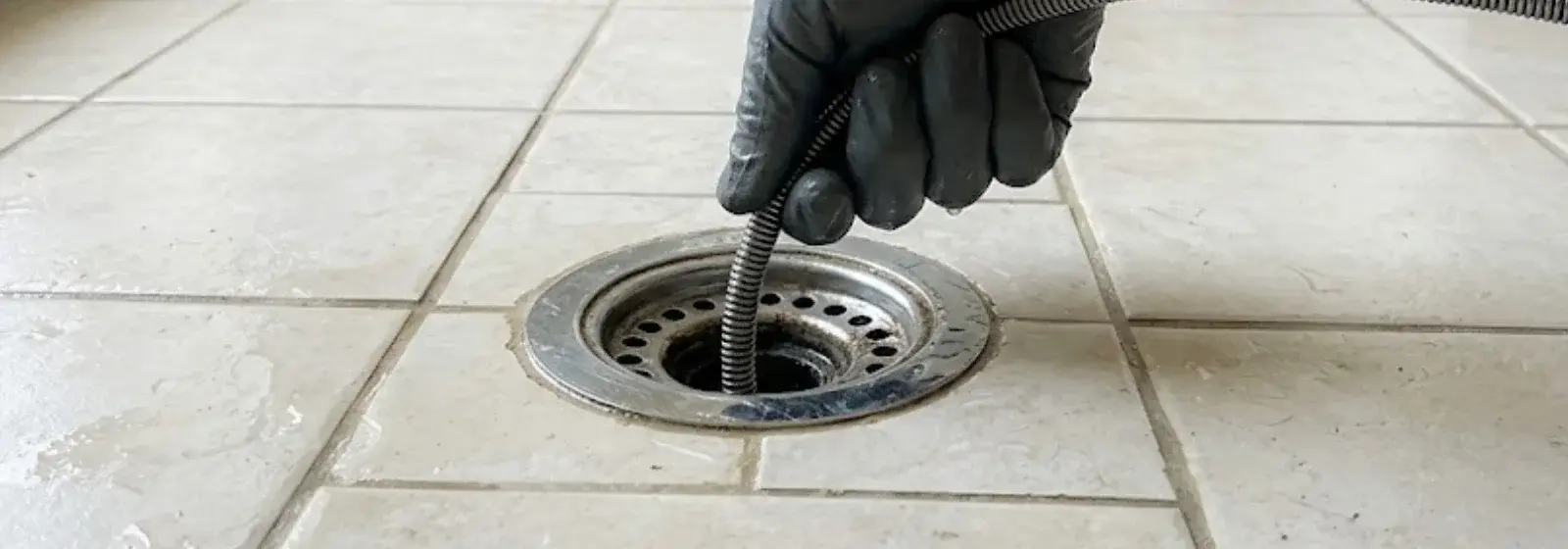
Kitchen drains are special. They carry grease and food residue that cool and harden in pipes. Whole-house slowdowns often trace back to the main line, where roots, scale or a sag restrict flow for every fixture.
This guide helps you sort the pattern, shows what homeowners can safely check and explains when a camera or a jetting visit is the right move.
Read the pattern
| Pattern | Likely cause | Next step |
|---|---|---|
| Kitchen sink only | Grease or food buildup in the kitchen line | Clean trap, then call for cleaning |
| Lowest fixtures back up first | Main line restriction | Stop using water and call |
| Several fixtures slow and gurgling | Vent or main line | Call for diagnosis |
| Slow after laundry or dishwasher | Shared branch or main line | Spread out water use and call |
| Slow only in heavy use | Partial blockage or a sag | Schedule a camera look |
The lowest fixture in the house, such as a basement floor drain or a ground-floor tub, shows trouble first because waste backs up from the bottom.
Kitchen drains and grease
Hot grease looks like liquid going down the drain and then turns solid as it cools. Over months it coats the pipe wall and narrows the opening, and food scraps and soap catch on it. The result is a slow drain that a plunger barely changes.
Habits that help
- Wipe greasy pans with a paper towel before washing.
- Never pour fat or oil down the drain.
- Use a strainer in the sink.
- Run hot water for a short while after using the disposal.
If grease is already built up, a plumber can cut it out with a cable or flush it with high-pressure water, see hydro jetting.
The main line
All the drains in a house meet in the main line that leaves the building. Roots, scale, grease, a bellied pipe or a collapsed section restrict it. When flow is restricted, every fixture is affected.
Do this if drains are backing up
- Stop using water in the house, including toilets, laundry and the dishwasher.
- Do not run a chemical cleaner into a backing-up line.
- Keep children and pets away from any sewage.
- Call for service, since sewage can damage floors and carry bacteria.
Vents
Vents let air into the system. A blocked vent can slow every drain on the line it serves and cause gurgling, siphoned traps and sewer smells. Vent trouble is often misread as a clog because it feels similar.
A plumber can test whether the vent is the issue before you pay for repeated cleaning that does not help.
How buildup forms
Pipes do not stay clean. Soap, hair, grease and mineral scale form a film that thickens over the years. A drain can lose most of its capacity and still pass water slowly, so the problem seems minor until it suddenly is not.
That is why a plunger or a quick cable fix often helps for a short time and then the drain slows again. The buildup is still there. A thorough cleaning removes the film from the pipe wall, which is the job of hydro jetting, and a camera afterward confirms the line is clear.
Signs of long-term buildup
- Drains that clear and then slow again within weeks.
- Foul smells that return after cleaning.
- Water that drains with a gurgle or swirl.
- Several fixtures that slow down together.
Keeping drains clear afterward
Ask the plumber to show you the camera footage or the material pulled from the line. Seeing what caused the slowdown, whether grease, roots or scale, tells you which habit to change. A line with roots needs a different plan than one coated in grease.
After a cleaning, a few habits help. Run hot water after heavy use, avoid flushing wipes and keep grease out of the sink. A yearly look at the cleanout and the trap tells you early if buildup is returning.
Why codes require cleanouts
The IPC and UPC require cleanouts in drain lines so the pipe can be reached with a cable or a camera. If your home has no accessible cleanout, adding one is a sensible step. It turns a hard job into a routine one and is often needed for any main line work.
What a plumber does
Typical visit
- Ask about the pattern and which fixtures are affected.
- Open the cleanout and run a cable to find resistance.
- Use a camera to see the cause, see sewer inspection.
- Clean or jet the line, see drain cleaning.
- Recommend repair if the camera shows damage, see sewer line repair.
Fountain note: if you live on post
If you live in on-post housing at Fort Carson, report plumbing problems through the housing office and your village Community Life NCO. They handle those repairs.
For off-post homes in Fountain and nearby, the main line on your property is yours to maintain, and a camera shows what is happening inside it.
Questions homeowners ask
They share a main line and vents. A restriction there slows everything.
Often, but food residue and a sagging pipe can contribute.
A cleanout and a rented machine can work, but the line may be damaged and a camera helps.
Report it to the housing office through your village Community Life NCO.
Where to go next
For cleaning and jetting, see drain cleaning. If the camera finds damage, sewer line repair is the next step.
If several drains are slow today, stop using water and call (719) 530-4349. Homes in Fountain, Security-Widefield and around Fort Carson are within our service area.